Can Voice Assistance Technology be a Game-Changer for Customer Experience Strategy?
U.S. Manufacturing Analytics Market Analysis by Manufacturers, Regions size and Forecast up to 2030
The advent of advanced technologies such as manufacturing analytics has made it incredibly easy for manufacturing companies to collect and analyze the data created from manufacturing operations to measure shortstops, downtime, and slowdowns of manufacturing equipment and identify bottlenecks in manufacturing processes and the areas needing improvement. Moreover, manufacturing analytics provides quality and performance metrics which help manufacturers in improving the efficiency and productivity. As a result, these solutions are increasingly being adopted by manufacturing companies in the U.S.
The rising requirement for greater organizational and operational visibility through big data is another key factor fueling the popularity of manufacturing analytics solutions in the U.S. By providing real-time insights and data collection, big data has completely revolutionized manufacturing operations. It also allows the manufacturers to slice and dice the collected data in order to get a holistic understanding of business activities. Additionally, this technology allows them to optimize operations, improve production, and resolve probable issues before their occurrence.
Request to Get the Sample Report@ https://www.psmarketresearch.com/market-analysis/us-manufacturing-analytics-market/report-sample
On-premises and cloud are the two methods by which these solutions are deployed. Of these, the demand for cloud-based deployment will be significantly higher in the future years, because of the enhanced flexibility and scalability provided by the cloud-based manufacturing analytics solutions. These solutions help mitigate the infrastructure and operational costs and can be easily customized according to the business requirements. In the U.S., the southern region will generate very high demand for these solutions in the forthcoming years.
Due to the above-mentioned reason, the U.S. manufacturing analytics market will demonstrate rapid expansion in the southern region of the country, as per the forecast of P&S Intelligence, a market research company based in India. The existence of numerous manufacturing companies, due to the abundant availability of land for setting up manufacturing plants and highly-skilled workers, and pro-business laws and a well-developed infrastructure are the main factors driving the surge of the market in this region.
Hence, it is quite clear that the adoption of manufacturing analytics solutions will rise enormously in the U.S. in the years to come, primarily because of the growing requirement for advanced technologies that can analyze manufacturing operations, detect the shortcomings in these processes, and provide feedback.
COVID-19 Impact Analysis on Electric Motor Market | Insights on Strategies of Key Players
What is the major forces driving the connected car business?
The increasing customer demand for a safer and enhanced driving experience and the introduction of advanced technologies such as the internet of things (IoT) in the automotive domain are the major factors driving the advancement of the global connected car market. The market is predicted to reach a valuation of $198,459.7 million by 2025, demonstrating a CAGR of 24.1% from 2020 to 2025.
Driver assistance, vehicle safety, fleet management, mobility management, and entertainment are the main categories under the service segmentation of the connected car market. Out of these, the mobility management division is predicted to register the fastest market growth in the coming years. This is because of the rising incorporation of shared mobility solutions and services such as ride-sharing, ride-hailing, two-wheeler sharing, and carsharing across the world. The vehicles used for shared mobility purposes must have higher operational efficiency, enhanced road safety and vehicle tracking features, improved vehicle management features, and higher adoption of IoT-based solutions and are thus, heavily dependent on connected car solutions.
Between the aftermarket and the original equipment manufacturer (OEM) categories under the end use segmentation of the connected car market, the aftermarket category is predicted to demonstrate faster growth in the market during the coming years. Due to the rising requirement of retrofitting the connected car solutions into the already existing automobiles and the ballooning demand for the upgradation and replacement of these solutions, the incorporation of these solutions by the aftermarket companies will increase rapidly in the coming years.
Request to Get the Sample Report@
Globally, the Asia-Pacific (APAC) connected car market will exhibit the fastest growth in the upcoming years. This is ascribed to the rapid technological advancements and innovations in the automotive industry in the various APAC nations such as Japan, South Korea, and China. Furthermore, China is currently one of the largest manufacturers of connected cars across the world, on account of the launch of numerous connected car-associated technology development programs, changing government safety regulations for automobiles, and the rising manufacturing capacity of the passenger vehicle manufacturing companies in the country.
The players operating in the connected car market are getting into partnerships with each other for enhancing their market presence. For example, DENSO CORP. announced in September 2019 that it has started a partnership with BlackBerry Ltd. for developing connected mobility solutions. Under this partnership, the firms started working on an integrated human-machine interface (HMI) digital cockpit system called Harmony CoreTM. This system would incorporate the use of QNX Hypervisor technology, developed by BlackBerry Ltd., for enabling integrated control over the in-vehicle HMI devices.
Similarly, Otonomo Technologies Ltd. and Microsoft Corp. entered into a partnership with each other in September 2019 for developing the latter’s connected vehicle platform. The organizations, through this partnership, aim to improve the various services offered via the platform such as mapping, parking, on-demand fueling, emergency response, usage-based insurance, predictive maintenance, in-vehicle package delivery, and media measurement. Furthermore, under this partnership, the connected vehicle platform developed by Microsoft Corp would be incorporated for plugging the connected car data into the existing ecosystem of Otonomo Technologies Ltd.
For Get More Detail Speak to Analyst:
Robert Bosch GmbH, NXP Semiconductors N.V., ZF Friedrichshafen AG., Panasonic Corp., Delphi Technologies PLC, Continental AG, , Infineon Technologies AG, DENSO CORP.,Valeo SA, and TE Connectivity Ltd.are some of the major market players.
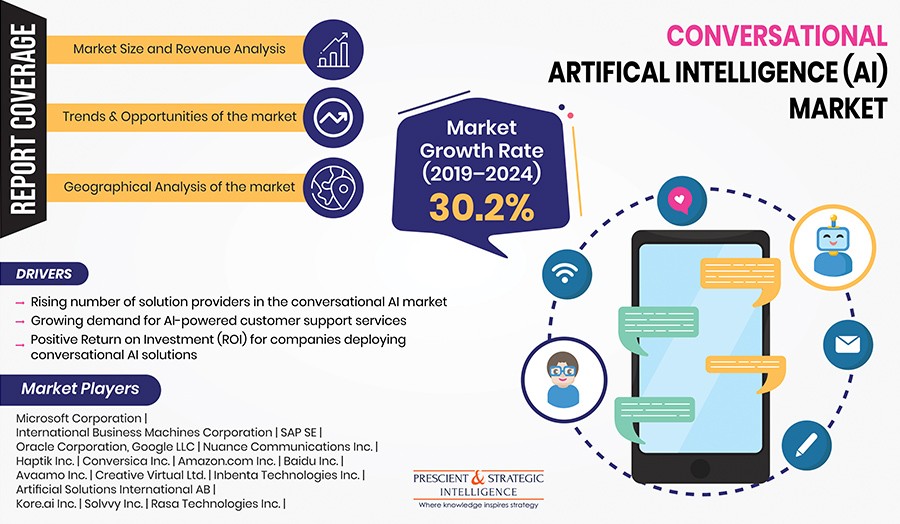
Conversational AI Market Future Trends, Prominent Players, Industry Impact and Forecast by 2024

Automotive Fuel Injection System Market Set to Exhibit Tremendous Growth in Future
The automotive industry has been witnessing a robust growth all across the globe, which can primarily be attributed to the rapid economic growth in developing countries, rising disposable income of people, and emergence of electric vehicles in the market. Because of all these factors, the production capacity of automobile industries has risen significantly. During the time period, 2005–2019, approximately 91.3 million motor vehicles sold worldwide, and the global automotive industry is predicted to generate a revenue of nearly $9 trillion by 2030. Moreover, about 92 million motor vehicles were produced around the world.
Ascribed to these factors, the automotive fuel injection system market is expected to advance at a substantial pace in the coming years. among heavy commercial vehicles, light commercial vehicles (LCV), and passenger cars, the largest demand for fuel injection systems in the past was created for passenger cars. This is due to the growing disposable income of people and swift urbanizations. Other than this, the requirement for these systems for light commercial vehicles is also predicted to rise considerably in the coming years, on account of low cost of LCVs and their high adoption for logistics supply chains, particularly in emerging economies.
Request to Get the Sample Report@ https://www.psmarketresearch.com/market-analysis/automotive-fuel-injection-system-market/report-sample
Diesel direct injection was the most in demand in the past, as these engines are currently the most efficient combustion engines and have the highest degree of thermal efficiency. The Asia-Pacific region is projected to emerge as the largest automotive fuel injection system market in the coming years. This is because of the high vehicle production and stringent regulations regarding emissions in the region. The enhanced economy and living standards in India and China have led to the increased sales volume of vehicles in the region.
Hence, the demand for fuel injection systems is growing due to the surging sales of vehicles.
Rising Medical Tourism Driving Anti-Aging and Skin Rejuvenation Energy-Based Aesthetic Devices Market
This is due to the rising medical tourism, awareness about the safe use and advantages of anti-aging and skin rejuvenation energy-based aesthetic devices, geriatric population, and inclination toward minimally invasive aesthetic treatments. These devices are utilized for performing various virtually painless, fast, and non-invasive or minimally invasive aesthetic treatments by making use of different energy-based technologies.
On the basis of technology, the anti-aging
and skin rejuvenation energy-based aesthetic devices market is divided
into light-based, ultrasound-based, laser-based, electromagnetic energy-based,
and plasma energy-based. Out of these, the laser-based technology accounted for
the major share of the market (28.3%) in 2018 as it is increasingly being
adopted for performing different aesthetic treatments for skin rejuvenation,
signs of aging, and other applications. Attributed to these factors, the
division is also expected to dominate the market during the forecast period.
When application is taken into consideration, the anti-aging and skin rejuvenation energy-based aesthetic devices market is categorized into fine lines & wrinkle reduction, oxygenation, skin tightening, and scar treatment. Among these, the largest share of the market was held by the category of skin tightening during the historical period (2014–2018). This was because of the increasing geriatric population, as aging results in the reduction of collagen in the skin, and anti-aging and skin rejuvenation energy-based aesthetic devices can be useful for treating the sagginess of the skin.
Receive Sample Copy of this Report: https://www.psmarketresearch.com/market-analysis/anti-aging-and-skin-rejuvenation-energy-based-aesthetic-devices-market/report-sample
One of the primary factors driving the growth of the anti-aging and skin rejuvenation energy-based
aesthetic devices market is the rising medical tourism. The medical
industry has been growing rapidly due to globalization and rising awareness
among people regarding alternate options for surgical aesthetic treatments. It
has been observed over the last few years that patients from developed nations
travel to countries such as South Africa, Singapore, Thailand, India, Turkey,
Mexico, and Costa Rica for seeking treatment. This is majorly because the
treatment offered in these countries is cheaper than in developed
countries.