Compressed Air Energy Storage Market is Powered by the increasing Global Population

The compressed air energy storage market was about USD 6,027.4 million in 2023, and it will reach USD 26,605.3 million by 2030, powering at a rate of 23.7% by the end of this decade. 

This is credited to the surge in the population and the subsequent surge in the power demand. As per the reports, global energy consumption increased from about 122.8 TWh in 2000 to more than 178.8 TWh in 2022.

On the basis of type, the diabatic category led the industry with 45%. Share. A D-CAES system compresses air and stows it in physical underground voids, for example salt caverns; or further appropriate media, such as hard rocks, aquifers, and underdevelopment gas fields. 

The stowed energy can produce electricity by heating air, by burning natural gas. This extra heat causes the air to expand, driving the conventional gas turbines, producing the generators to produce electricity.

D-CAES plants normally have lower operational costs as opposed to adiabatic and isothermal plants, making them further reasonable in the long run. Though, they are not much-friendly toward the environment as they depend on gas combustion. 

Furthermore, even though this system accomplishes a competence of only 50%, it is the most prevalent, as in 2020, it was the only marketed variant globally.

The isothermal category will grow at a rate of 23.9% in the years to come, as this method can attain a flawless or nearly textbook heat exchange with the environs. 

This is for the reason that it lets for twice the amount of air compression as opposed to adiabatic systems. It is for this reason, the lasting expenses on an isothermal CAES system are approximately 14% lower than that of traditional procedures.

The energy management category will lead the compressed air energy storage market of over USD 9 billion. Energy management is a methodical procedure concerning the monitoring and enhancement of energy use in a building, to decrease the overall consumption and indirect GHG emissions. 

This procedure consists of more than a few key steps, for example incessant data collection & analysis for identification of prospects to advance energy competence through enhancing equipment schedules and flow rates and setting parameters.

Share:

APAC Is Dominating Cryogenic Pump Market

In 2021, the cryogenic pump market size stood at USD 1,407.6 million, which is projected to witness a 3.1% CAGR during 2021–2030, reaching USD 1,860.1 million by 2030

P&S Intelligence majorly credits this growth to the increasing installation of such pumps in the metallurgy, chemicals, and electronics sector. Along with, the surge in expenditure throughout the energy generation industry armed with the shift toward energy production from renewable and natural gas resources to reduce carbon emission.

The nitrogen category is all set to experience the fastest growth rate of approximately 3%, in the near future. This can be owed to the extensive utilization of nitrogen gas for the maintenance of plants, and start-up and shutdown provisions of refineries and petrochemical companies.

Thus, the increasing utilization of nitrogen gas in numerous industries, including metallurgy, healthcare, and oil and gas, is escalating the acceptance of cryogenic pumps for capturing the gas and its vapor from the base.

The oil and gas sector is the largest utilizer of cryogenic pumps in the industry, owing to the increasing production of natural gas because of its rising demand from the special chemical, petrochemical, fertilizer, and refining industries.

In 2021, APAC cryogenic pump market  was largest revenue generator, with USD 538.2 million, and projected to continue its dominance in the future as well. This can be credited to the rapid urbanization; the growth in industries, including energy & power and metallurgy in Japan, China, and India, and the escalation in the requirement for power across the region. Additionally, in India, the government is preparing to guarantee a 24*7 electricity supply.      

In order to get this target, the country needs to improve its energy generation systems. Therefore, the government is focusing more on natural gas-fired power plants, which, indeed, will grow the demand for cryogenic pumps in the coming few years.

Hence, the increasing installation of such pumps in the metallurgy, chemicals, and electronics sector, the demand for cryogenic pumps will increase in the future.


Share:

Phishing Protection Market Will Grow the Fastest in the Asia-Pacific Region

The phishing protection market was USD 2,307.5 million in 2023, which will power at a rate of 13.7% by the end go this decade, to touch USD 5,609.3 million by 2030. This is because of the growing phishing attacks and continuing tech progressions.


Furthermore, a surge in remote working and an increase in the acceptance of cloud-based communication increase the cases of phishing threats, which drives the requirement for solutions of phishing protection.

Furthermore, tech progressions, developing vectors, and regulatory compliance power the requirement for flexible and state-of-the-art phishing protection strategies. These elements have aided players in incessant battle to stop determined and dynamic cyber threats.

The healthcare category will grow the fastest at a rate of 14.4% by the end of this decade. This development is related with the growing count of phishing attacks in the healthcare sector, as a result of human faults, third-party susceptibilities, outdated tech, and the unawareness of healthcare staff pertaining to online threats.

APAC will have the fastest growth, progressing at a rate of 14.2% by the end of this decade. This is majorly because of the continuing and dynamic digital revolution of various industries and the growing acceptance of cutting-edge cybersecurity measures for protecting digital assets.

The growing count of phishing attacks all over the world has a lot to do with the growing demand for phishing protection solutions all over the world. This trend will continue to grow in the years to come as well.

Share:

Exploring the Electrolyzers Market Trends, Applications, and Future Prospects

The electrolyzers market was USD 496.7 million in 2023, which will increase to USD 51,992.8 million, advancing at a 94.7% compound annual growth rate, by 2030.

Moreover, the increasing need for green ammonia derived by electrolysis is assisting the expansion of this industry. The majority of ammonia is made via conventional approaches, necessitates more power, and it contributes approximately 1.8% of worldwide carbon dioxide emissions.

The rising emphasis of nations around the world on net-zero carbon dioxide emissions is the major reason behind the rising utilization of the electrolysis technique for making green ammonia.

The proton exchange membrane (PEM) category, on the other hand, is likely to advance significantly in the years to come. This can be primarily because of the progressions in this technology, coupled with the fact that these types are a basis of high-purity hydrogen.

The more than 2,000 kW category, based on capacity, will advance significantly during this decade. This is because of the rising need for electrolyzers of this category in the industrial and automotive sectors.

In addition, because of the rising incorporation of these devices in electric grids, the industry is expanding.

APAC is likely to observe a high compound annual growth rate in the years to come. This is because of the increasing need for fuel-cell EVs in South Korea, Japan, and China and the commencement of key green H2 projects in China.

It is because of the rise in the need for clean energy sources, the electrolyzers industry will continue to advance significantly in the years to come.


Share:

Transdermal Drug Delivery Systems Market is Led by the North American Region

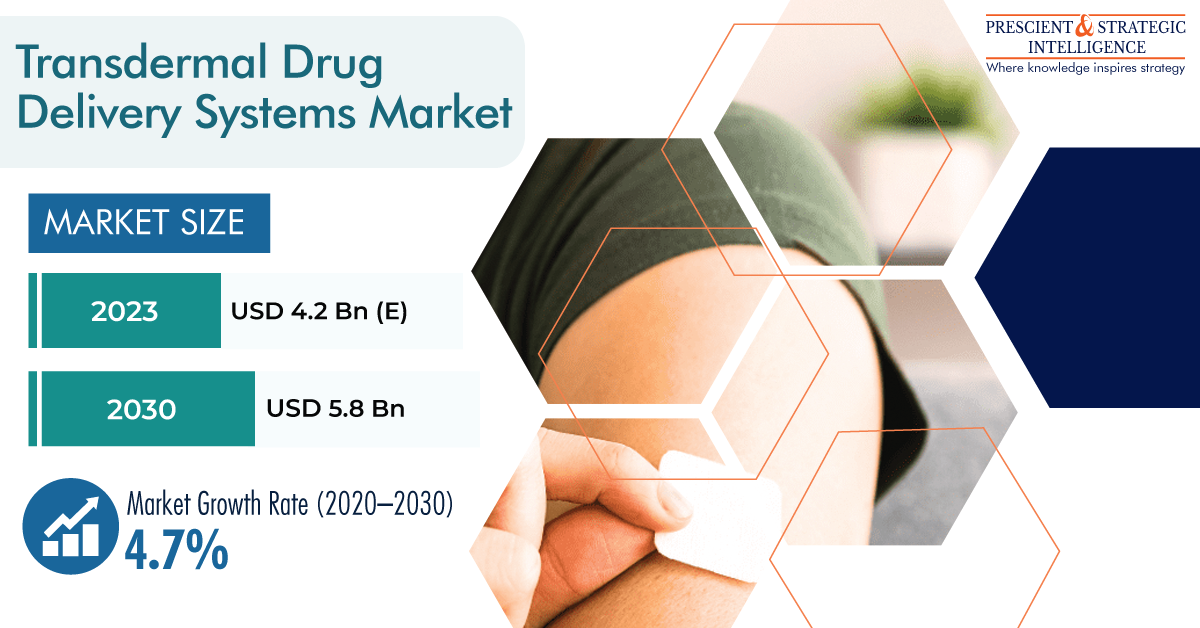
The total value of the transdermal drug delivery systems market was USD 4.2 billion in 2023, and it will power at a compound annual growth rate of 4.7% by the end of this decade, to touch USD 5.8 billion in 2030.

Transdermal Drug Delivery Systems Market Growth Report 2030

The sector is mostly driven by the rising incidence of chronic illnesses, and for the same, a conservative drug delivery system is weaker than required due to hepatic first-pass metabolism.  What is meant by this is that, when utmost oral drugs enter the liver, they are mostly digested before reaching the targeted tissue, therefore bringing about insufficient efficacy.

More than one billion people at a global level smoke cigarette, with incidence continuing to be high in spite of surveillance, educational, and supply restriction efforts on the international and national levels.

This factor is driving the requirement for transdermal nicotine patches for ages.  If the reports are to be believed, as opposed to a placebo administered for a year, nicotine patches are 50–60% more successful in helping individuals give up cigarettes.

North American transdermal drug delivery systems market is the leader. The expansion in this continent is chiefly driven by patent expirations, letting more businesses to enter the industry with generic alternatives of these devices.

Also, the relaunch of previously failed drugs for subcutaneous delivery and the vast spending by the stalwarts on related research and development are key reasons for the substantial share seized by this region.

Due to the growing incidence of chronic illnesses all over the world, the demand for transdermal drug delivery systems is on the rise. This trend will continue in the years to come as well. 

Share:

Auto Injectors Industry was Led by the North American Region

According to the latest market research study published by P&S Intelligence, the auto injectors market made a total revenue of USD 1,011 million in 2023, and it will propel at a rate of 14.8% in the years to come, to touch a value of USD 2640.2 million in 2030.

Auto Injectors Market Growth and Forecast Report, 2030


The key factors powering the industry expansion include the mounting requirement for the drug administration ease, growing incidence of chronic and lifestyle associated diseases, and evolving healthcare technologies.

According to the WHO, over 16 billion injections are given on a yearly basis at a global level. So, the rising need for ease and safety throughout the procedure is powering the advance of the industry.

North America is the leader of auto injectors market, and this prominent position will persist in the years to come as well. This is for the reason that the continent provides ready reimbursement for the use of autoinjectors. Furthermore, the growing occurrence of anaphylactic shock will encourage the acceptance of auto-injectors filled with epinephrine. Moreover, the two nations in the region exhibit a high awareness with regards to self-administration drug delivery devices.

The fastest growth is observed by the APAC region, chiefly as a result of the growing occurrence of diabetes. Since diabetics need normal insulin administration, auto-injectors save the trouble of seeing a medic every time and, therefore, make them independent. 

Moreover, the mounting occurrence of severe reactions as a result of food allergies is driving the requirement for epinephrine injections.

Due to the increasing occurrence of lifestyle and chronic diseases all over the world, the demand for auto injectors is on the rise. This trend wil continue in the near future as well.

Share:

Process Analyzer Market Will Reach USD 10.1 Billion By 2030

The worldwide market for process analyzers was valued at approximately USD 7.9 billion in 2023 and is expected to grow to around USD 10.1 billion by 2030, with a compound annual growth rate (CAGR) of 3.7% between 2024 and 2030.

The mounting concentration on advancing water quality and public well-being, growing water needs from sectors and people, the thriving oil & gas sector, and severe government rules on wastewater treatment are the key industry propellers. 

The optimization of procedures, fortification of assets, and compliance are the major advantages of a process analyzer. The device is mainly utilized for the equipment-aided accurate periodic measurement of the chemical and physical features of an industrial procedure. Additionally, the acceptance of AI, automation, and smart tech in the manufacturing sector is catering as a key booster factor for the industry. 

The lessening obtainability of freshwater is because of the distressed weather patterns because of the pollution-encouraged climate change. Additionally, the surge in the awareness to preserve water, implement rainwater harvesting and wastewater treatment methods, and surge in the effectiveness of water supply systems propels the industry.

MLSS analyzers, based on liquid analysis, are projected to experience the most significant growth rate during the forecast period. These types of analyzers are predominantly utilized in environmental monitoring and wastewater treatment processes. 

They play a crucial role in optimizing and monitoring processes, analyzing microorganism concentrations, and effectively breaking down waste within activated sludge. By enabling continuous monitoring, MLSS analyzers alleviate the necessity for manual sampling and laboratory tests, thereby saving time and resources for operators of wastewater treatment plants.

In 2023, on the basis of gas analyzers, oxygen analyzers produced revenue of approximately USD 3 billion. The quantity of oxygen obtainable plays a leading role in determining whether the burning of a fuel is rich or lean.

Thus, such instruments are utilized to determine the amount of this gas in boilers, furnaces, and furnaces. The key benefits of this device are fast and precise readings in high-temp and corrosive atmospheres.


Share:

Popular Posts

Blog Archive